
Once you’re operating as a corporation, you can’t treat owner pay as casual withdrawals. The IRS expects officers and shareholders who work in the business to take a regular paycheck and handle withholdings like any employee. Personally, I use Gusto for my payroll, and it’s been really easy to do, so don’t let the idea of payroll intimidate you. To elect S-Corp status, you must file IRS Form 2553 within two months and fifteen days of forming your business or at the start of a new tax year. Many owners use LLC formation QuickBooks services to handle the paperwork, but it’s important to read the terms of service before signing up. I learned that the hard way when the company I used made serious accounting mistakes that overstated my income by six figures.
Filing articles of incorporation
There are many benefits to starting or operating a business as a C Corporation. Although there may be important advantages in forming a C Corporation, you must also be aware of its disadvantages. If you’d like to grow your business into a large, publicly traded company, a Delaware C-Corp is a great choice.

What types of businesses should form a C corp?
If you’re thinking of starting a business or are already running one and looking for ways to minimize your tax liability, a C corporation may be the right choice for you. The company pays shareholders dividends after its income has been taxed. The shareholders will then have to pay personal income taxes on those dividends, causing a “double taxation” clause. Additionally, shareholders can’t deduct any losses on their https://www.bookstime.com/ tax returns. C corporations and LLCs differ primarily in ownership structure, tax treatment, and formalities. C corps have shareholders with stock ownership while LLCs have members with percentage interests.
- This allows the C Corp and the LLC to operate as separate legal entities, which offers liability protection to the parent company.
- If you’re a startup that anticipates fast growth and expects to have a lot of shareholders, this could be the right choice for you.
- Before committing to a corporate structure, undergo a rigorous evaluation and solicit legal and financial advice from trusted parties who are deeply familiar with your jurisdiction and specific business.
- Foreign-operating corporations may access specialized deductions like Foreign-Derived Intangible Income (FDII).
- Public corporations are regulated by federal law through the Securities and Exchange Commission (SEC).
- Thus, one way to avoid double taxation is to pay the owners higher salaries instead of distributing dividends, but the individual’s income tax on a salary is taxed at a higher rate than dividend distributions.
How to elect S-corporation status
C corps also have extra regulatory eyes on them, which can cause a rise in legal expenses.And don’t forget about double taxation. First on the corporate level, when the C corp files income taxes, and then again on the individual level when profits are distributed to shareholders. The shareholders of a C corporation aren’t able to deduct business losses on their individual tax returns. A C corporation (often referred to as C-corp) is a legal structure for businesses. It outlines specific tax and management rules that owners, or shareholders, must adhere to when setting up and running their business entity. C corporations face “double taxation” – first, the company pays federal income tax on corporate profits, and then shareholders pay personal income taxes on dividends they receive.

The C corp entity itself is subject to corporate income taxation, while shareholders are subject to personal taxation. In simple terms, a C corp pays tax on its income just as an individual would pay tax on their yearly salary—a flat 21% on operational profits. C corporations must also adhere to corporate formalities, such as holding annual meetings, keeping detailed financial records, and filing annual reports with the state.
C corporation definition
- Register for state taxesRegister for state taxes with your state’s tax agency.
- Stock C corps represent the most common corporate structure for businesses seeking growth and capital investment.
- On the contrary, S Corps allows only up to 100 shareholders to invest in the firm.
- Importantly, corporations offer their owners limited liability protection.
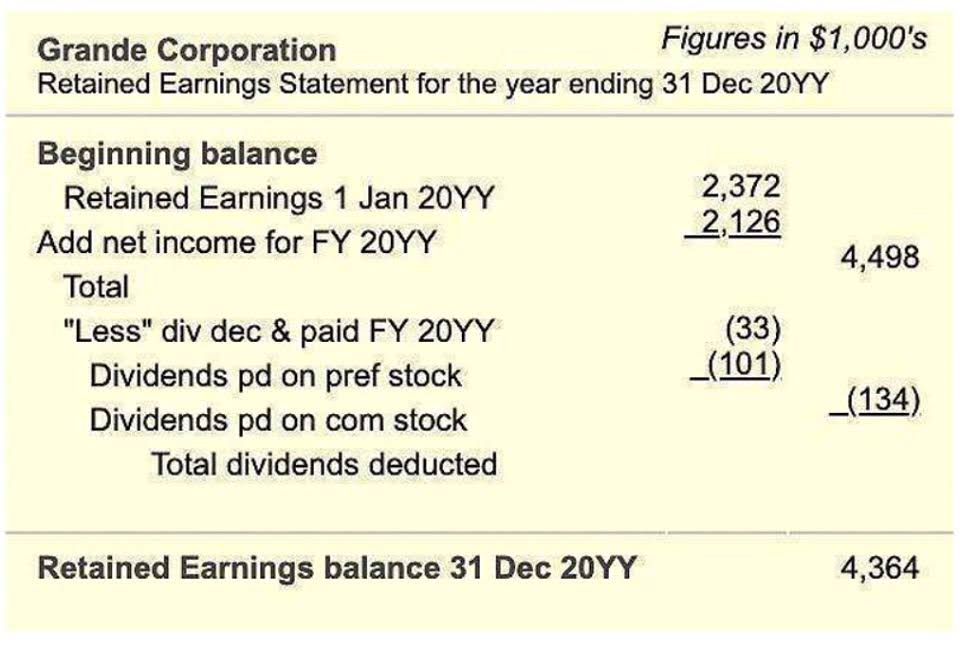
- After paying these taxes, any remaining profits distributed to shareholders as dividends are again taxed at individual income rates.
Shareholders in a C corporation can’t deduct business losses on their tax returns, unlike an S corp. Another feature of C corporations is perpetual existence, meaning that the company’s operations are not tied to the life or involvement of any one individual. This contrasts with sole proprietorships or partnerships, which may dissolve if c corporation definition an owner leaves or passes away. In a C corp, ownership can change hands through the sale or transfer of shares without affecting the company’s continued operations.
- Violating this voids the S election and defaults back to C corp tax treatment.
- For an LLC, the main advantage of S-corp taxation is that it may save money on self-employment taxes.
- While these reporting requirements create additional administrative burdens, they also provide structure and clarity that can benefit businesses planning for substantial growth.
- A C corporation differs from an S corporation because a C corporation pays its own income tax, while an S corporation passes income through to the owners.
- You can form an LLC and elect to be taxed as either structure by filing the right forms with the IRS.
Choosing between a C-Corp and an S-Corp felt like trying to learn to swim while already treading water. I knew I had to figure it out fast or keep sending more money to the IRS until they started eyeing my firstborn—and I’m quite fond of that kid. S corp gets its name from Subchapter S of the Internal Revenue Code, under which it has elected to be taxed.
- Except as otherwise provided in this paragraph (c), a business entity that has a single owner and is not a corporation under paragraph (b) of this section is disregarded as an entity separate from its owner.
- For federal income tax purposes, a C corporation is recognized as a separate taxpaying entity.
- C corp profits are taxed when earned and then taxed again when distributed to shareholders as dividends.
- Stock represents their ownership and signifies their claim on a portion of the company’s assets and earnings.
- Many business owners appreciate the flexibility an LLC affords early on but eventually turn to a corporate structure for its advantages in equity financing.
Formation of a C-Corp
Most businesses use a professional accountant or advisory to help with compliance. While these reporting requirements create additional administrative burdens, they also provide structure and clarity that can benefit businesses planning for substantial growth. The detailed financial records required for C corporation tax reporting often help businesses maintain better financial oversight and planning. C corporations and S corporations share several fundamental characteristics but differ in key areas that impact taxation, ownership structure, and operational flexibility. Understanding these differences helps entrepreneurs select the most appropriate entity for their business goals. Regardless of which corporate structure is under consideration, however, a tax professional and/or lawyer can help make the filing process as smooth as possible and ensure that all the necessary requirements are met.